Making Belt Misalignment Measurable
FROM SPORADIC SHUTDOWNS TO A CLEARLY IDENTIFIED ROOT CAUSE
Combining e-PrimeTracker, OT process data and the ScrapeTec Analytic Engine makes dynamic belt misalignment measurable, analysable and technically manageable.
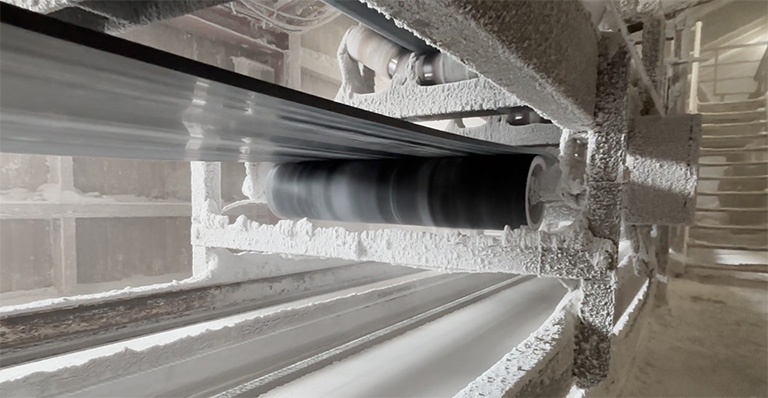
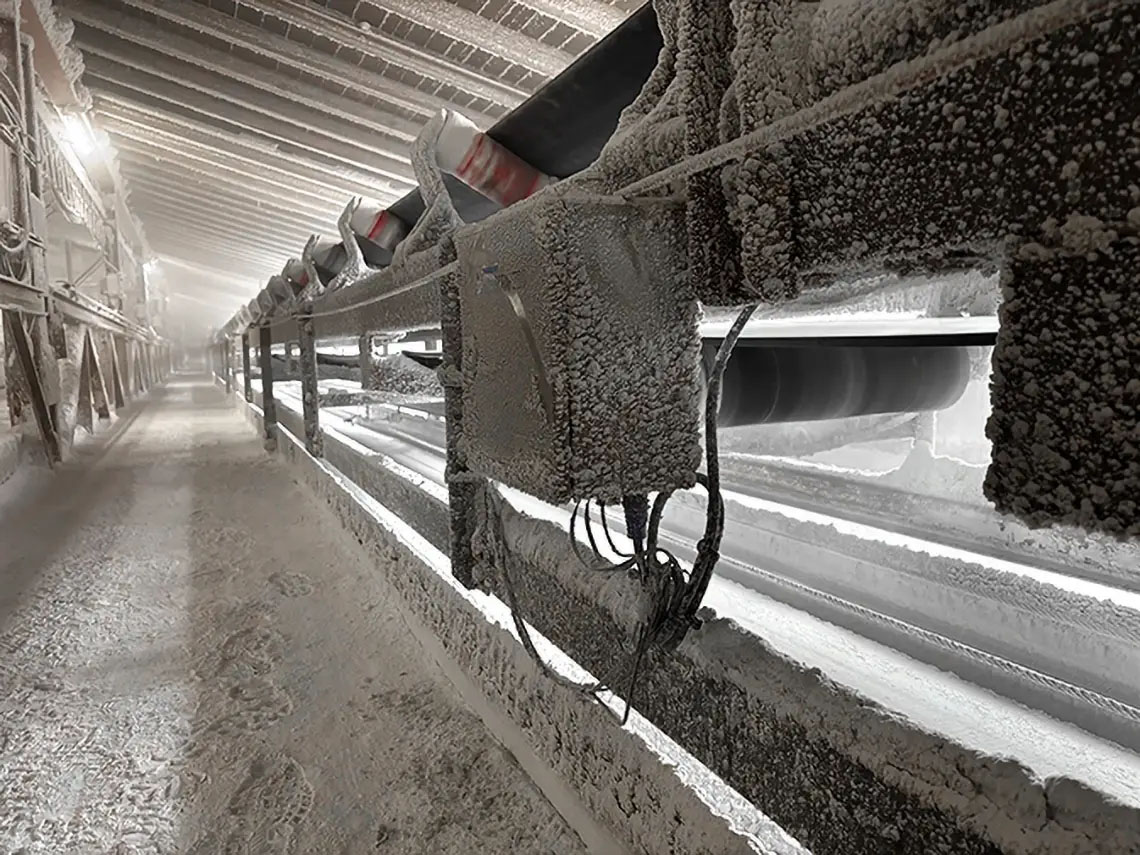
At a chemical industry production site, sporadic belt misalignment repeatedly caused the automatic shutdown of a central conveyor system. As the affected conveyor forms part of a critical main conveying line, each shutdown had an immediate impact on upstream and downstream processes. The challenge was therefore not only to reduce unplanned downtime, but above all to identify the underlying cause, which until then had remained unclear.
The specific conveyor configuration made conventional troubleshooting particularly challenging. Two loading points positioned in close succession, the dynamic activation of the second loading point and a travelling tripper car with changing discharge positions create varying load conditions and highly dynamic belt behaviour. As a result, the sporadic misalignment events could not reliably be attributed to a single mechanical component or specific operating condition.
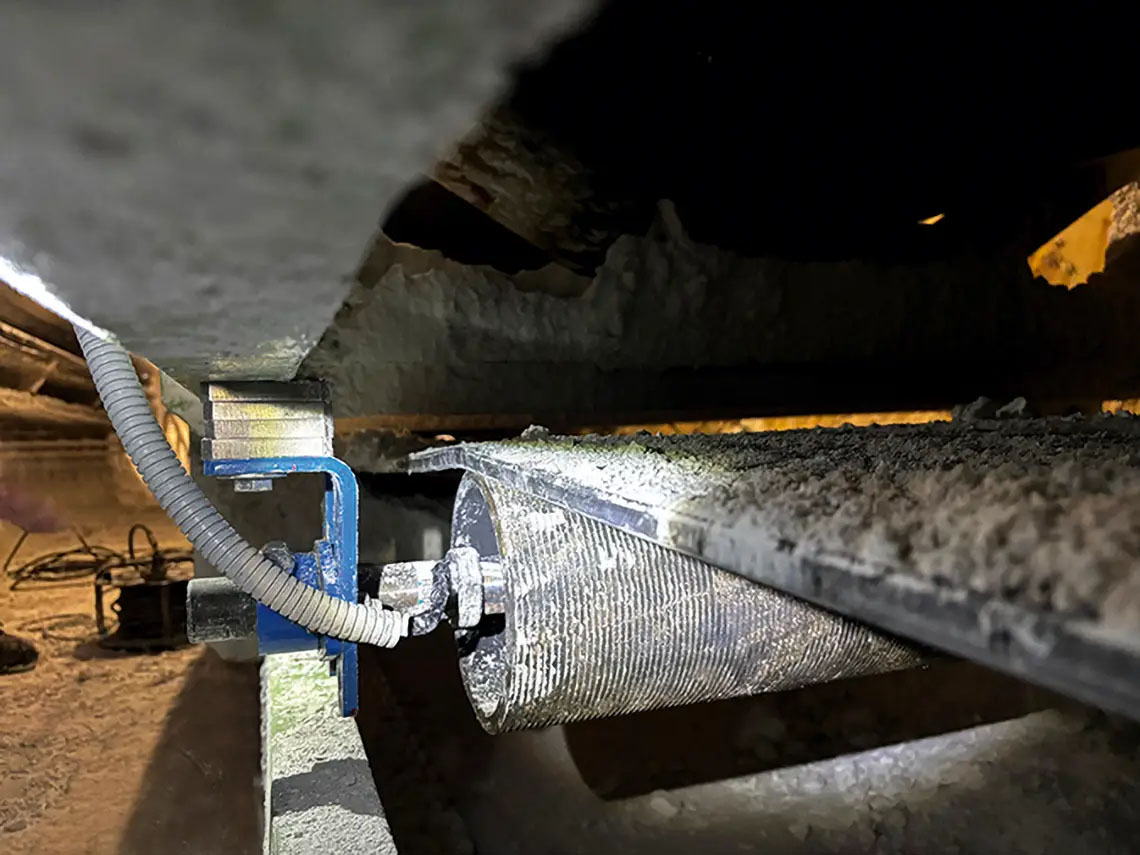
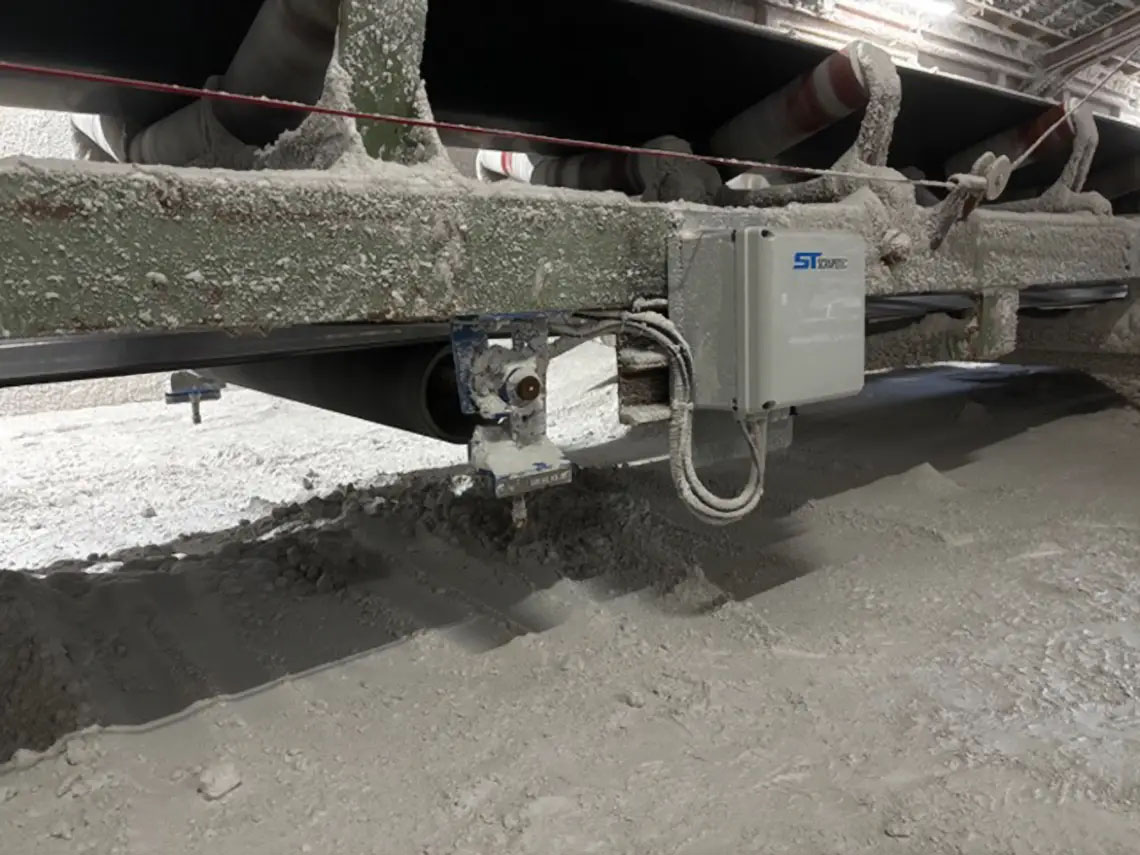
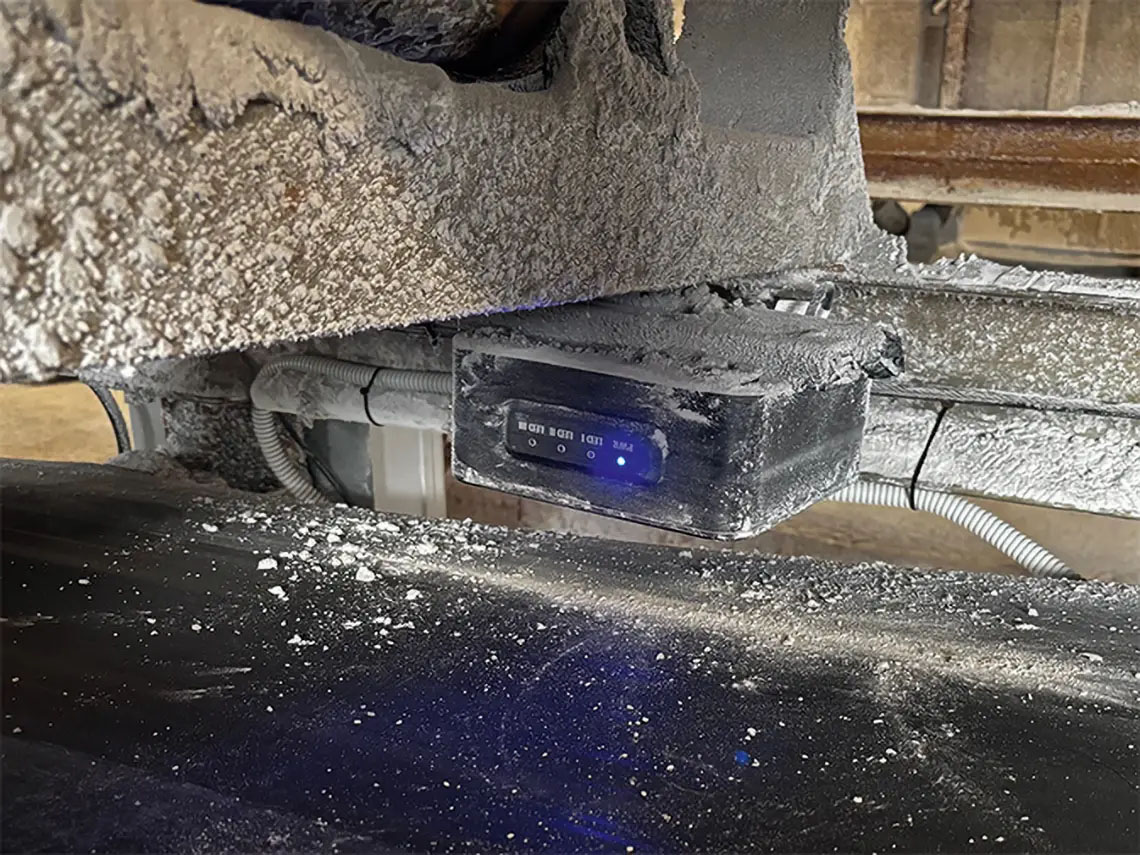
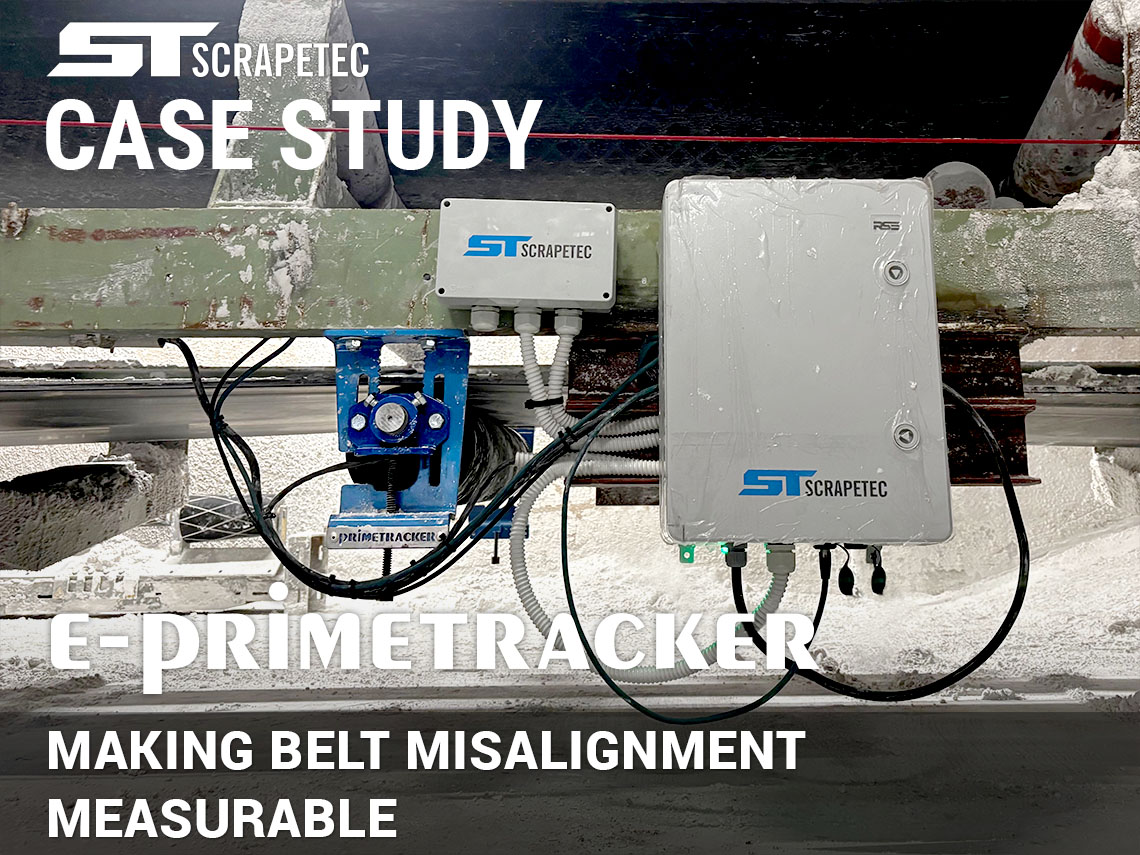
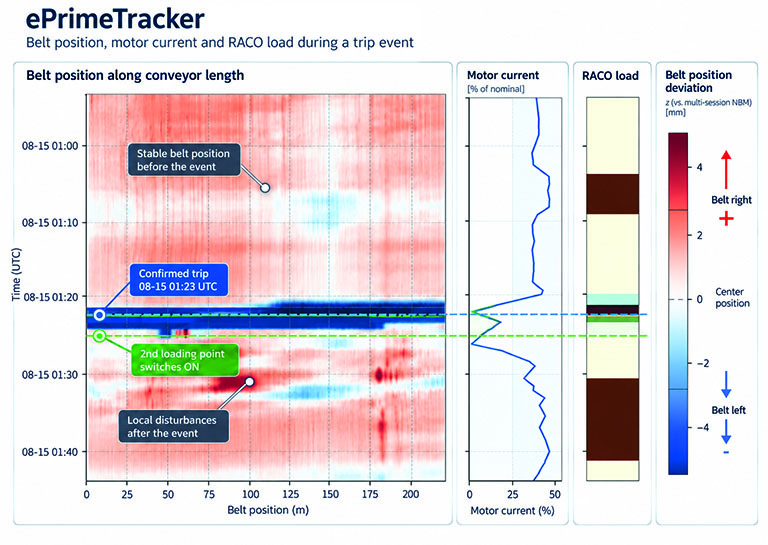
For continuous, data-driven analysis, a e-PrimeTracker was installed on the return side of the conveyor, approximately 18 metres from the tail pulley. The e-PrimeTracker is based on the proven mechanical operating principle of the PrimeTracker, which continuously and without delay corrects belt misalignment even at the slightest deviation. In addition, it is equipped with sensors and a digital unit for recording, processing, and transmitting belt-tracking data. Its measurement data was correlated with relevant operating and OT data from the plant. This included motor current as well as status information relating to the activation of the second loading point. Using the ScrapeTec Analytic Engine, belt movements and process conditions could be synchronised over time, allowing different operating conditions and shutdown events to be compared.
The first stage of the analysis systematically excluded potential mechanical causes. The following factors were investigated::
- The belt construction, e.g. the alignment of the drum and rollers
- Possible changes to the conveyor belt
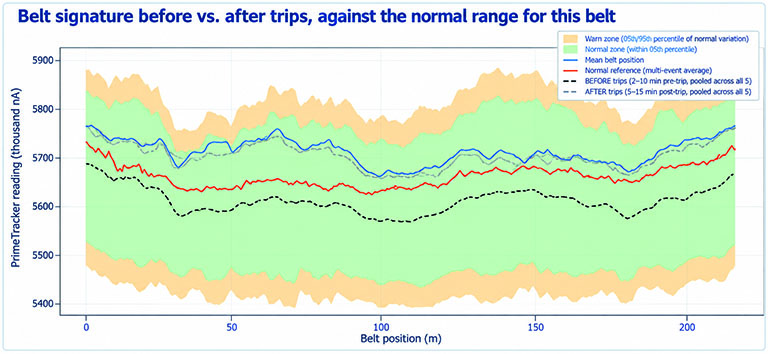
- The condition of the return pulley, pulley surface, and relevant bearing locations. Supplementary frequency analyses showed no significant deviations from the normal plant behaviour.
The decisive correlation emerged from the combined analysis of e-PrimeTracker measurements and OT data. Across multiple shutdown events, a clear temporal relationship was identified between critical belt movements and the dynamic activation of the second loading point.
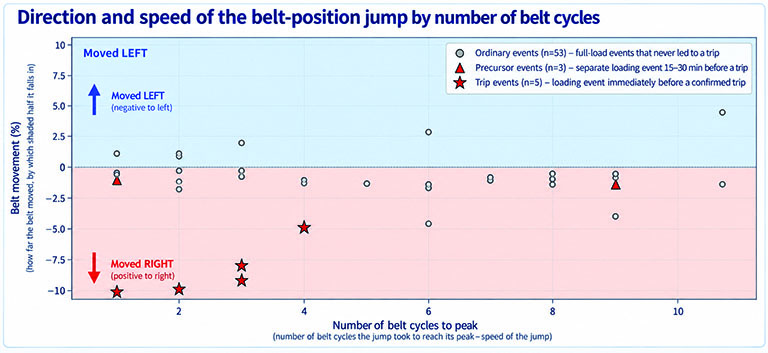
Impulsive material loading at this point generated the relevant belt movements that ultimately triggered the sporadic belt misalignment shutdowns.
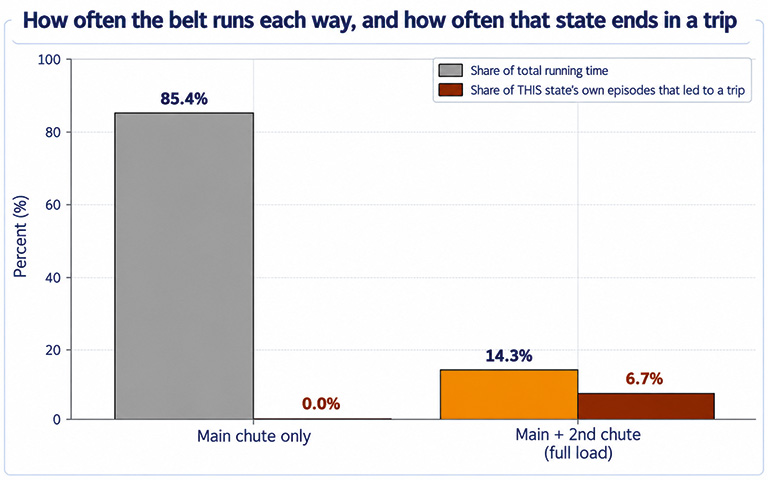
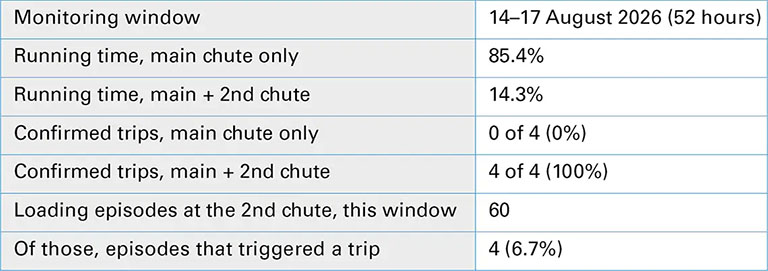
For the first time, a previously difficult-to-reproduce fault could therefore be linked to a specific process event. Based on these findings, ScrapeTec engineers were able to develop targeted technical measures to stabilise belt tracking. While the integrated mechanical belt correction of the e-PrimeTracker stabilizes belt tracking immediately, the additional data acquisition enables the identification of underlying process and operating conditions as well as recommendations for action derived from them. At the same time, e-PrimeTracker enables the effectiveness of these measures to be continuously verified under actual operating conditions.
Sporadic belt misalignment thus becomes a measurable process: instead of reacting to faults, e-PrimeTracker provides a reliable data basis for identifying root causes, implementing targeted corrective measures and sustainably reducing unplanned downtime.